How Do I Know If My Pokémon Cards Are Worth Grading?
Quick Answer: Should you get your Pokémon card graded?
A Pokémon card may be worth grading when it has enough collectible or market value to justify the grading expense and has a reasonable chance of receiving a strong grade. Rarity, demand, age, condition, centering, and the difference between the card's raw and graded value should all be considered before submitting it. At TCG Trainers Universe, we can help collectors determine which cards may be good candidates for professional grading.
What Makes a Pokémon Card Worth Grading?
Not every valuable Pokémon card needs to be graded, and not every card needs to be in perfect condition to be worth submitting. PSA notes that even vintage cards in lower grades can be worth grading because rarity and scarcity can make them desirable to collectors.
Start by considering the card itself. Vintage Pokémon cards, particularly scarce or historically significant releases, may have enough collector demand to make grading worthwhile even when the condition is not perfect. Modern cards can also be candidates for grading when they are rare, highly sought after, or appear capable of receiving a high grade.
The key question is not simply, “Is this card valuable?” It is, “Could professional grading add enough value, protection, authentication, or collector appeal to justify the cost?”
Condition Matters More Than Many Collectors Expect
Professional grading services examine several characteristics when determining a card's grade. PSA considers factors including centering, corners, surface condition, staining, focus, and overall eye appeal. CGC similarly evaluates centering, manufacturing and handling defects, preservation, scuffing, indentations, fading, and other condition factors. Beckett evaluates centering, corners, edges, and surface.
Before submitting a card, examine it carefully under good lighting. Look for:
-
Off-center borders
-
Whitening or chipping along the edges
-
Rounded or damaged corners
-
Scratches, dents, or print defects
-
Creases or bends
-
Staining or discoloration
-
Surface imperfections that may not be visible at first glance
A card that looks excellent in a binder can still have small defects that affect its final grade.
Why Does the Potential Grade Matter?
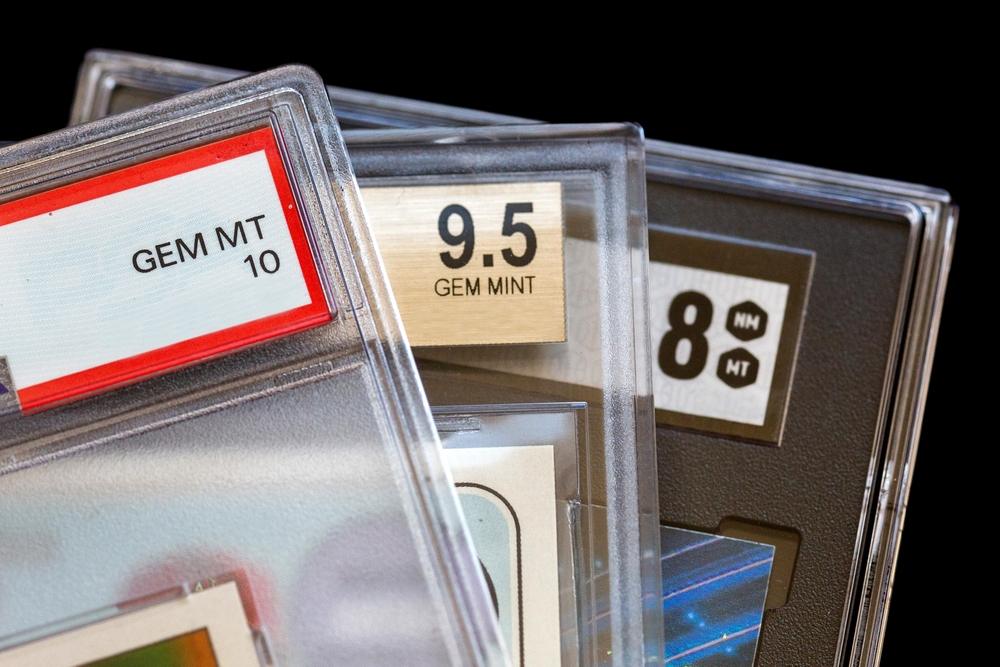
The difference between grades can be significant. A PSA 10, for example, represents a virtually perfect card under PSA's grading standards, while lower grades allow progressively greater degrees of wear or defects. CGC and Beckett use their own grading standards and scales as well.
That means collectors should not simply look at the price of the highest-grade example and assume their card will receive the same grade.
Instead, compare your card's condition with actual examples at different grades. Current card-market platforms such as Card Ladder compile public sales data and population information across grading companies, providing a way to compare historical and current sales rather than relying solely on asking prices.
Don't Forget the Cost of Grading
Grading is an expense, so the potential increase in a card's value should be considered alongside the submission cost, shipping, insurance, and any applicable service fees.
The grading market has also experienced significant demand in 2026. PSA reported in May that its active backlog was approaching 10 million cards after submissions increased another 20%, demonstrating just how much demand exists for professional card authentication and grading.
For that reason, it can make sense to be selective. Grading every card in a collection may not be the best approach. Concentrating on cards with strong collector demand, meaningful rarity, or realistic potential for a desirable grade can make the process more worthwhile.
So, Which Pokémon Cards Should You Consider Grading?
As a general rule, consider grading a Pokémon card when several factors come together: the card is desirable, its condition is strong for its age, comparable graded cards sell for significantly more than raw copies, and the potential benefit outweighs the cost of grading.
If you think you have a card worth grading but don't want to handle the submission process yourself, TCG Trainers Universe can help. Our grading service includes card grading preparation and shipping, with our staff logging and photographing each card, preparing it for safe shipment, helping you select the appropriate grading company and submission tier, and handling the submission coordination. We also remove fingerprints and light surface smudges when possible as part of the preparation process. Once your cards are graded, they are returned to TCG Trainers Universe for local pickup.
Have a Pokémon card you think might be worth grading? Bring it to TCG Trainers Universe and let our team help you determine whether grading makes sense for your card and collection.